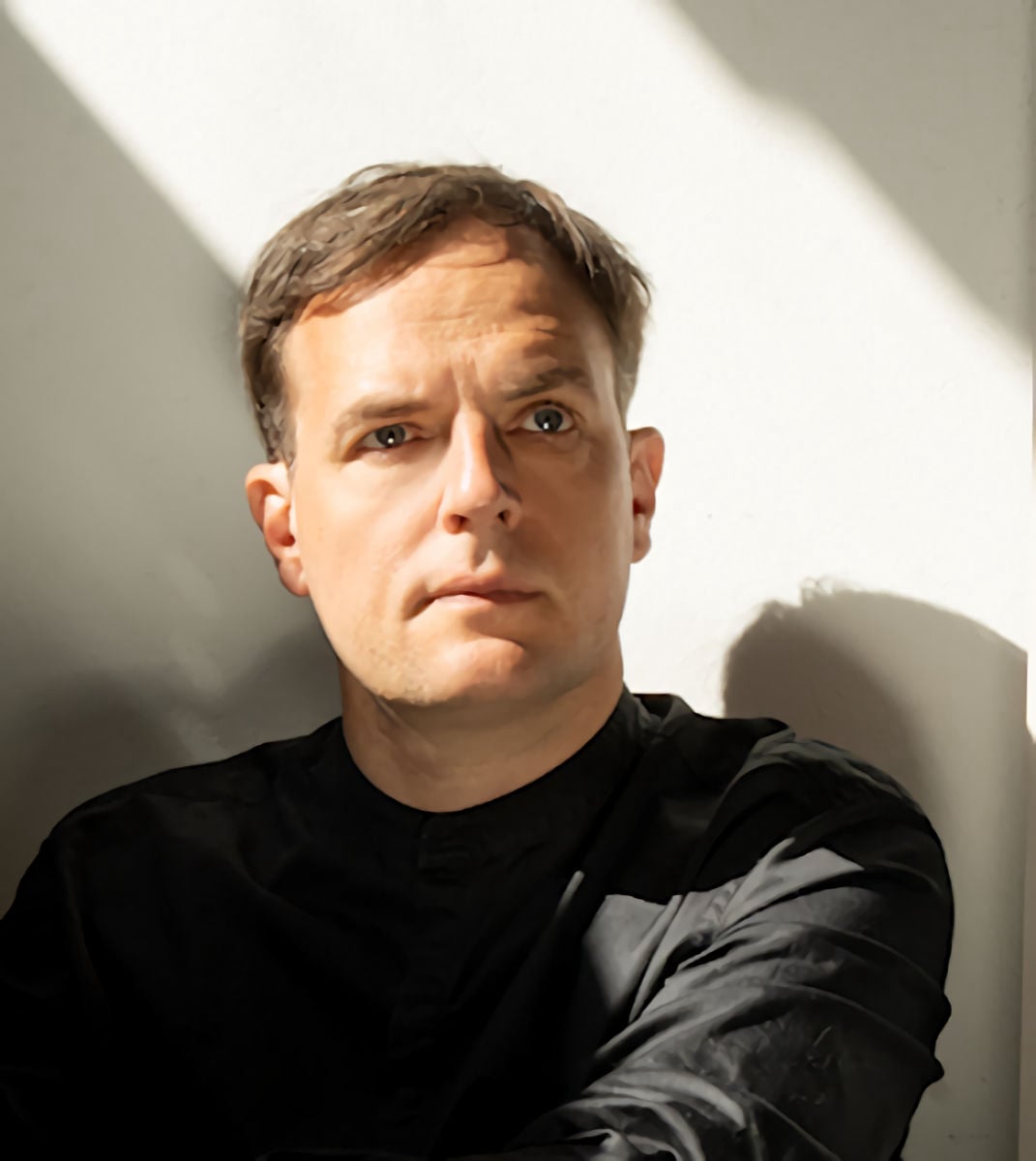
Simon Schubert
Alongside his own technique of paper folding with which he has developed constantly evolving architectural images, Simon Schubert works with blacks and deep colours. His brilliant white sheets are exhibited next to very dense pigments, plunging the spectator into a world that resonates with absence and existence.
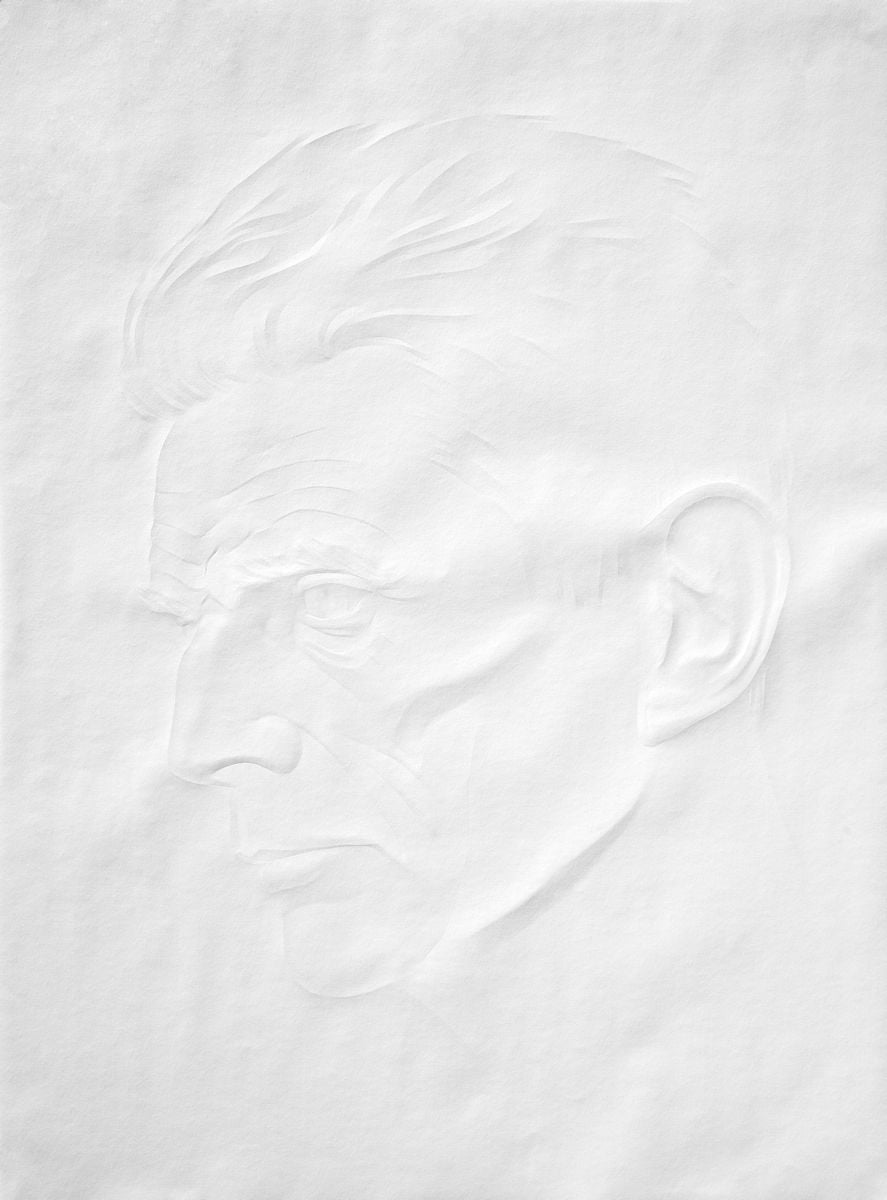
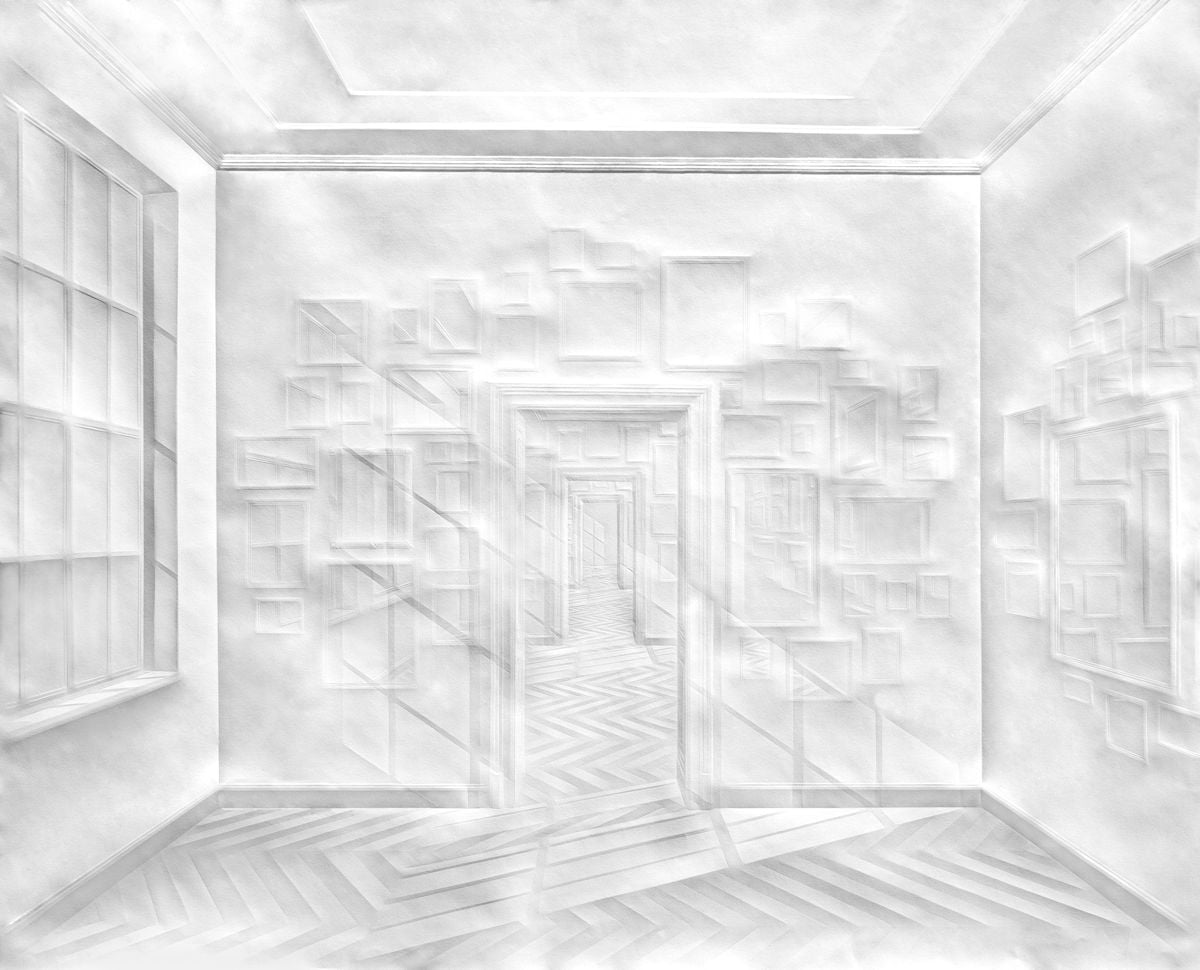
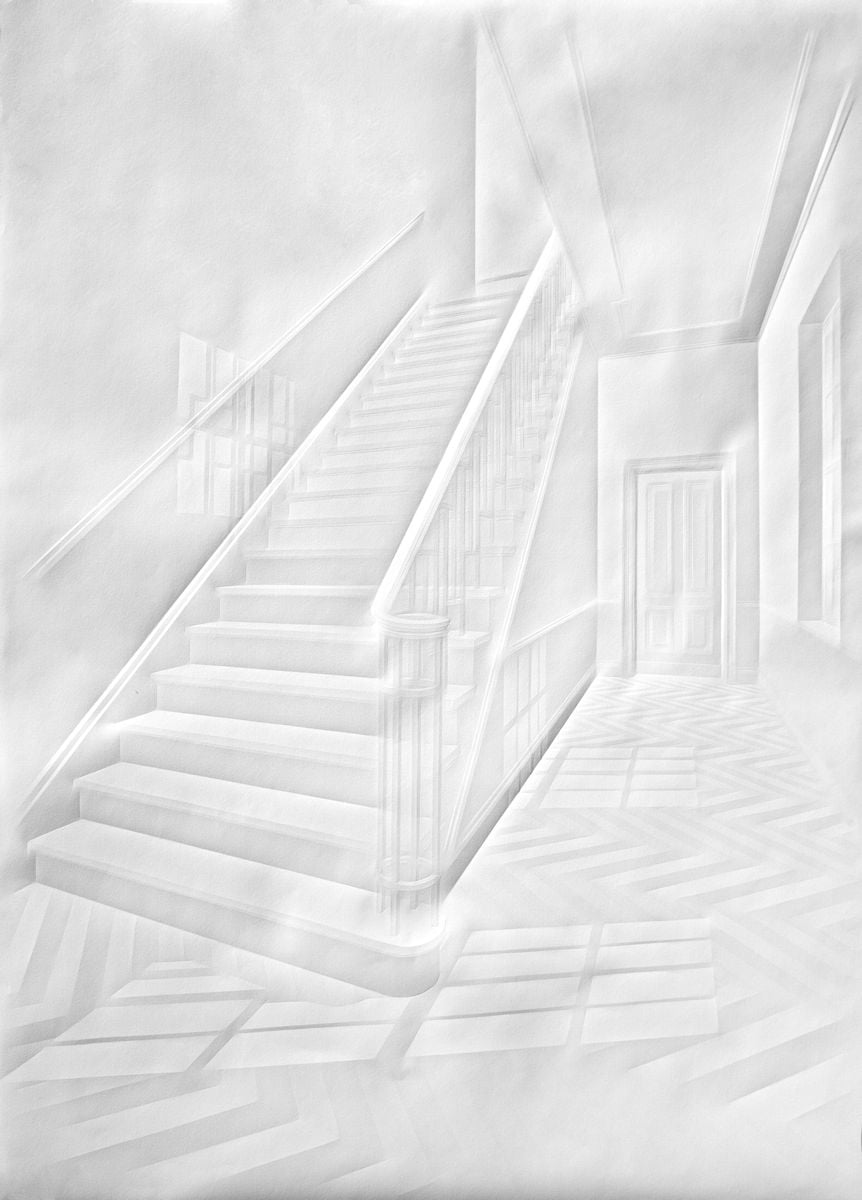
Simon Schubert surfs between the dexterity of folding sheets of immaculate white paper and the density of graphite powder. What he most often depicts are scenes of interior architecture, long corridors, staircases, closed doors or rays of sunlight breaking through windows: all void of any human trace. He creates universes in which a feeling of solitude or absence prevail, where space and light become subjects in their own right. When he was studying sculpture, Schubert invented a technique of folding paper, creating depth and perspective, enabling him to mix fine arts with his interest in literature and philosophy. He is particulary captivated by Samuel Beckett, as much for his play Quad, in which four actors alternately enter and exit a square stage, as for the construction of his writings. “In an attempt to somehow connect with Samuel Beckett, to reflect on his work and incorporate it into mine, I sought to reproduce his face. But I represented the wrinkles with creases of paper. It seemed to echo his use of language, almost pushed to abstraction, or even disappearance. I imagined drawing without using a pencil, so that this technique could structure and then vanish into the whiteness.”
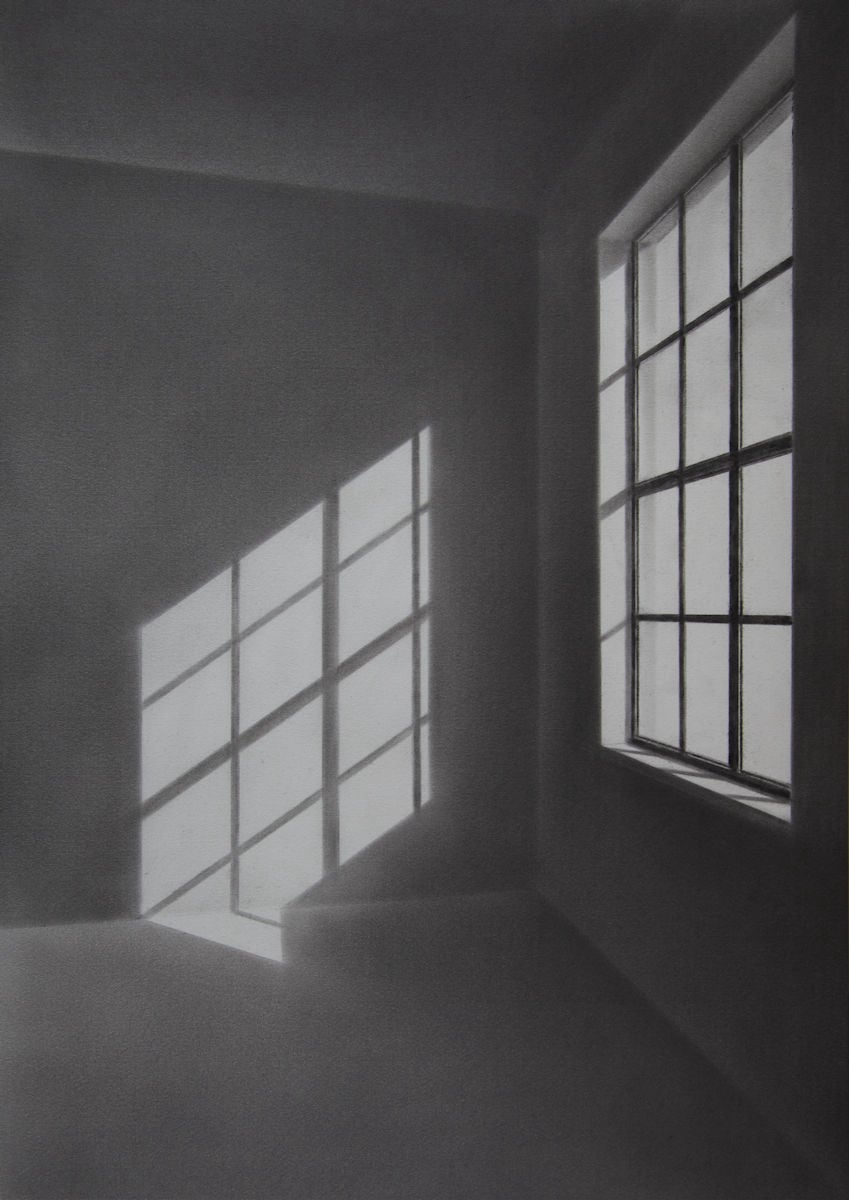
A former assistant professor of philosophy, Schubert is fascinated by Gottfried Wilhelm Leibniz and Gilles Deleuze: “this hypothesis of a reality, of a world folded in on itself.” The artist shows us a world made up of sequences, forward and backward tracking shots. He isolates sections, constructs and deconstructs his fictional or real interior architecture. His subjects prove to be similar, but tighter, in his black graphite pencil drawings, where the lateral views of windows or interiors seem to allude to Johannes Vermeer or Vilhelm Hammershøi. In these “almost nothings”, he lets the mind wander to a vision of a melancholy, existential life, appealing to our perception and our projections. “I seek to give free rein to our imagination, our memories, and to visualise far beyond what the drawing shows us, so that it becomes a deeper, more personalised image.” For a few years now, Schubert has introduced colour, in a form of boreal abstraction, with dominant plum and rose purples. He describes these works as “spatial mirrors”, reflecting both the spirit of places and the emotions of the spectators…
texte de Marie Maertens.